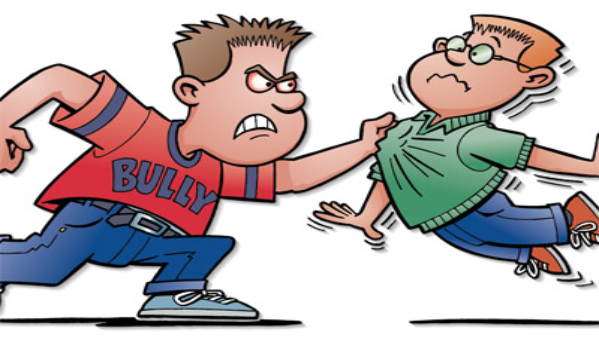
- Physical – hitting, kicking, taking belongings
- Verbal – name calling, insulting, racial remarks, sexual harassement, homophobic remarks
- In direct – spreading nasty stories about someone, excluding someone from groups
- Online bullying – sending threatening or abusive text messages or e-mails, personally or anonymously – making insulting comments about someone on a website, social networking site (e.g. Whatsapp, Skype, Facebook, Twitter, Snapchat, Instagram) or online diary (blog) making or sharing derogatory or embrassing videos of someone via mobile phone or e-mail (such as ‘Happy Slapping’ videos).
- Emotional – ignoring, being unfriendly, tormenting, threatening gestures


Its is important that all the school community is aware that there will be some degree of bullying within the school, even if only slight or infrequent and deal with it promptly as part of the Behaviour Policy.
WHAT IS BULLYING ?
- It is deliberately hurful behavior
- It is repeated often over a period of time
- It is diffcuilt for those being bullied to stop the process. Bullying results in the victim feeling pain and distress.


If bullying is identified school staff will:
- Watch for early signs of distress
- Listen carefully with empathy and, if neccessary, in confidence to all involved
- Record all incidents and date them
- Make clear to the bully that the behaviour is unacceptable
- Involve parents where neccessary
- Involve all the children in strategies to counter bullying
- Encourage all children to discuss any problems and show sympathy
- Ensure all areas of the school building are supervised
- Create ‘safe areas’ near staff on duty
- Ensure that situation is dealt with
- Frightened to walk to/from school or Doesn’t want to go to school
- Becomes withdrawn/lacks confidence
- Cries at night/teary at school
- Feels ill in the morning
- School work suffers
- Unexplained bruises
- May start to bully others
- Might stop eating
- Is afraid to use the internet
- Lonely – change in friendship groups
- If you see it stop it!
- If you are being bullied tell someone!
- Write it down or draw a picture if it helps you explain what has happened
- If it does not STOP – tell again! Contact ‘SH’ to report it.
- Put it in the worry box.
- Put a note under Deputy Head’s or CLO’s (Chief Learning Officer)door.
- Report bullying
- Inform parents
- Attempt to help the bully change their behaviour
- Make sure the victim feels safe and secure
- Support the school
- Advice children not to hit back but to tell someone
The ethos of the school postively promotes mutual respect, self discipline and social responsibility through:-
- Regular and consistent use of reward systems, ranging from teacher praise for a good work to whole school system such as Behaviour Charts and Gold and Silver awards; Random Acts of Kidness
- An emphasis on creating a positive and pleasant working environment where children’s work is valued through the quality of display and where the building is attractive and well maintained;
- Teaching and non-teaching staff make effective use of behavioural managemnet strategies;
- Meaningful assembly themes (e.g. values based and festivals, celebrations etc);songs
- Celebration of individual, group and whole school success;
- Recongnition of the authority of all adults in school and an appreciation of their worth;
- Respect for all children as individuals with particular needs;
- Recongnition of the school as a community with rules to benefit all members;
In kind of atmosphere, we believe that the children will be able to work happily together and a high standard of discipline and learning will be achieved.
- Whole school involvement is essential:A clear policy to which staff, pupils and parents are committed, reduces bullying.
- The emphasis should be on prevention:Consideration needsto be given, for example, to the playground environment, movement around the building and early links with neighbourinbg schools and outside agencies, all of which contribute to the ethos of the school. Assemblies, PHSE etc. Police Liaison
- Pupil perception is important:Reaching agreement about what counts as bullying is fundamental.
- The fear of bullying is even more widespread than bullying itself:The fear of bullying can have equally devastating effects on children’s personal and academic development.
- The needs of all pupils must be considered:Specific curriculum contributions broaden pupil perception of bullying and develop skills such as assertiveness and conflict resolution (PHSE). Support mechanisms should be agreed not only for victims, but also bullies and bystanders ( those who witness bullying).
- Adults can be bullies too:Adults are in a powerful postion – they can endorse bullying by othetrs and collude in the isolation of pupils who are bullied. Teachers can and do make a difference when they constructively intervene. Bullying is an emotive issue. Parents should also show a good role model to children in dealing with the school on bullying and other issues.
- Make everyone in the school community aware of the policy and of our attitude
- Be sympathetic so that the victim knows they will be listened to.
- Consider ways in which the curriculum can teach victims to become assertive ans self confident through role play and discussion.
- Consider ways in which Ensure we have an effective policy to deal with the victim and the bully.
- The victim could be supported by others in the class or individually.
- Consider the use of outside agencies who may be able to support the victim.
- Involve the parents, with agreed strategies on what can be done to help
- Ensure that there are effective lines of communication to allow a victim to talk to a teacher, a supervising adult or a peer
- Be aware of changes in pupils’ patterns of behaivor.
- Always respond to a report of bullying.
- Use strategies to build self esteem.
- Ask the victim how they should suggest/like the incident to be dealt with.
Vulnerability is not always obvious to adults. So be aware. The sterotypical victim can be misleading. Victims may be pupils who:
- Are new to the class or school
- Are different in appearance, speech or background from other pupils
- Suffer from low self esteem
- Are not particularly assertive
- Are particularly nervous or anxious
- May simply be in the wrong place at the wrong time.
Some groups of pupils can also be victims. Particularly able or studious children, pupils with special needs, pupils from minority ethnic groups, girls being bullied by boys or boys by girls.
Bullies comes from all races, cultures, home backgrounds and both sexes. They can be found throughout the whole Nursery and Primary age range. The problem can be made worse if the home background supports and encourages their behaviour. Bullies can be pupils who:
- Lack remorse; they believe the victim deserves the treatment
- Lack empathy, they cannot imagine how the victim may feel
- Have aggressive attitudes over which they show little control
- Have a clear policy on behaviour and bullying and ensure the pupils are aware of it
- Give the bully strategies for dealing with their behaviour, such as time out
- Set clear boundaries on behaviour that pupils know and understand
- Ensure we do not encourage bullying by bullying ourselves
- Encourage empathy situations in drama, PHSE, Assemblies and discussion, for example.
- Ensure the victim explains to the bully how they feel and the effect bullying has on them.
- Allow the bully times to discuss their feelings and the effect of their behaviour on others.
- Ask the bully what they intend to do to alleviate the victim distress.
- Never ignore bullying situations.
- Involve the parents
- Use peer pressure positively.
- Establish why the bully is picking on that particular victim. Attempt to reconcile and shift the power from bully to victim.
- Monitor the situation by having follow – up meetings to check on progress.
DO
- Remain calm. Do not over – react as you may add to the bully’s fun and control of the situation
- Take the report or incident seriously
- Take action as quickly as possible
- Think as to whether your reaction should be public or private
- Offer reassurance to the victim.do not make them feel foolish or inadequate.
- Offer help, advice and support to the victim(s)
- Make it clear to the bully that their behaviour is unacceptable
- Encourage the bully to see the victim’s point of view
- Punish the bully but do not over react. You could give out the message that it is acceptable to bully if you have the powers.
- Explain the punishment clearly and why you have given it
- Record all incidents on appropriate sheets. Circlate these to appropriate staff, including phase group leaders.
- Inform all staff if the incident arose out of a situation where everyone needs to be vigilant.
- Be aware of why/how the situation arose and plan ahead to try and prevent the incident happening again.
DON'T
- Be over protective and prevent the victims from helping themselves
- Keep the whole incident a secret because you have dealt with it
- Try and hide the incident from the parents of the victim or bully
- Speak to the prents until you have a clear plan of the way forward
-
Counsel the victim and the bully -
Record the incident -
Communicate the incident to class teacher, phase group leader, deputy and head-teacher, teacher on duty, midday assistant as appropriate -
Monitor behaviour of victim and bully -
Involve parents where incidents are repeated of great concern -
Monitor incidents and patterns of behaviour and act appropriately